
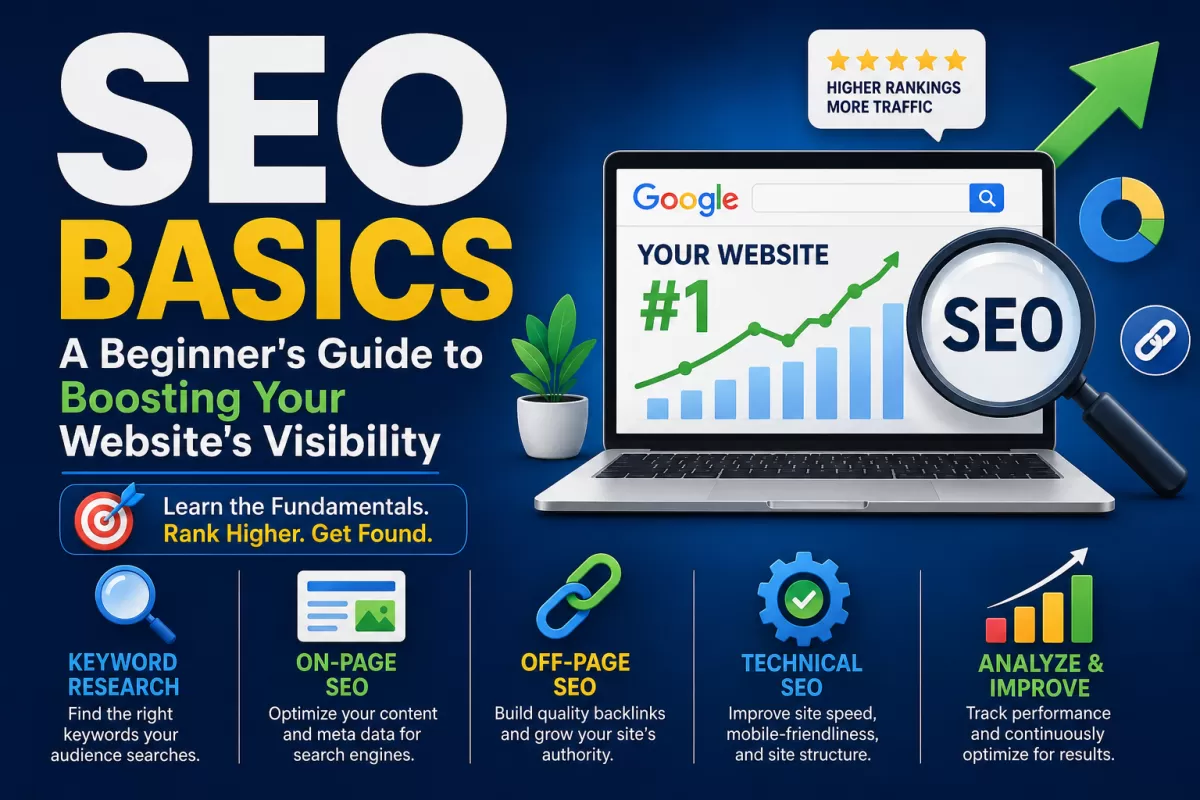
A Beginner's Guide to Boosting Your Website's Visibility
In today’s fast-paced digital world, simply having a website is not enough. To attract genuine traffic and convert visitors into customers, your site must be easy to find. This is where SEO Basics come into play. SEO, or Search Engine Optimization, is the art of making your website more appealing to search engines like Google, which increases your visibility in organic search results. This guide will clarify the core concepts of SEO, providing you with the foundational knowledge to start optimizing your online presence and reach your target audience effectively. Understanding these principles is the first step toward unlocking your website’s full potential.
Understanding Search Engines and SEO Basics
Search engines exist to organize the vast amount of information on the web and make it accessible to users. Major platforms like Google and Bing act as gatekeepers to this information. Their primary goal is to provide the most relevant, high-quality answers to a user’s query as quickly as possible. When you understand how these engines think, you can align your website content with their requirements.
The process of search engine operation involves three main steps:
- Crawling: Search engine bots constantly scan the web to discover new and updated pages.
- Indexing: Once found, search engines store and organize this content in a massive database, known as the index.
- Ranking: When a user searches for a term, the search engine’s algorithm determines which pages in its index are most relevant and lists them in order of importance.
Google currently indexes hundreds of billions of web pages. Improving your position in these rankings helps you attract more visitors without paying for ads.
Keyword Research: The Foundation of SEO Basics
Keyword research is the process of finding the terms and phrases your audience uses when they search for what you offer. If you do not know what terms people use, your content may go unseen.
Identifying Your Target Audience’s Search Intent
You must understand what a user hopes to achieve when they type a search query. Intent generally falls into four categories:
- Informational: The user wants to learn something.
- Navigational: The user is looking for a specific website.
- Commercial: The user is researching products before buying.
- Transactional: The user is ready to make a purchase.
Aligning your content with the user’s intent ensures you provide exactly what they are looking for. For example, a bakery should target phrases like “best sourdough bread recipe” for informational intent and “order birthday cake online” for transactional intent.
Tools and Techniques for Keyword Discovery
You do not need to guess which terms are popular. Tools like Google Keyword Planner, Ahrefs, and SEMrush show you how many people search for a term and how difficult it is to rank for that phrase. You can also gain insights by looking at the “People Also Ask” section on Google results pages to see common questions related to your niche.
Long-Tail Keywords: Precision Targeting
Long-tail keywords are longer, more specific phrases, such as “gluten-free chocolate cake recipe for beginners.” While these phrases have lower search volume, they often have less competition and a higher chance of conversion because the searcher has a very specific need.
On-Page SEO: Optimizing Your Website Content
On-page SEO involves optimizing elements on your individual pages to help search engines understand your content.
Optimizing Title Tags and Meta Descriptions
The title tag and meta description are the first things a user sees on the search results page. Your title tag should be descriptive, include your primary keyword, and stay under 60 characters to avoid being cut off. The meta description serves as a short summary that encourages users to click your link. Both should be unique for every page on your site to prevent confusion for search engines.
Crafting High-Quality, Engaging Content
Content is the most critical factor for ranking. You should aim to create valuable, original information that directly answers the user’s questions. A well-structured page with clear headings and readable paragraphs makes it easier for search engines to scan your content. Longer, more in-depth content often performs better because it provides a more comprehensive answer to the user’s query.
Image Optimization and Internal Linking
Search engines cannot “see” images, so they rely on file names and alt text to understand them. Use descriptive file names and add alt text that explains the image content to improve accessibility and ranking. Internal linking, which means linking to other pages on your own site, helps users move through your content and tells search engines which pages are most important.
Off-Page SEO: Building Authority and Trust
Off-page SEO focuses on actions taken outside of your website to improve its ranking. This is primarily about building your site’s reputation.
Understanding Backlinks: Quality Over Quantity
Backlinks are links from other websites to yours. Search engines view these as “votes of confidence.” A link from a reputable, high-authority site is far more valuable than dozens of links from unknown or spammy websites. Focus on earning quality links by creating content that others naturally want to cite.
Link Building Strategies and Best Practices
Ethical link-building requires effort. You can reach out to other website owners in your niche for potential collaborations, create shareable research or graphics, or contribute as a guest author on relevant industry blogs. Avoid “black-hat” tactics, such as buying links or participating in link farms, as these can lead to penalties and damage your site’s reputation.
Social Signals and Brand Mentions
While not a direct ranking factor, social media activity and brand mentions help increase visibility. When people share your content or mention your brand online, it can drive traffic and build awareness, which indirectly supports your overall search performance.
Technical SEO: Ensuring Search Engine Accessibility
Technical SEO ensures your website is structured correctly so that search engines can easily find and read your pages.
Website Speed and Mobile-Friendliness
Users expect websites to load quickly. Slow loading times increase the number of people who leave your site immediately, which negatively impacts your rankings. Additionally, because most searches occur on mobile devices, your site must be mobile-friendly. You can check your site’s performance using free tools like Google’s PageSpeed Insights.
Site Structure, URLs, and XML Sitemaps
A logical website structure helps both users and search engines find what they need. Use clean, descriptive URLs that contain your keywords. An XML sitemap is a file that lists all the important pages on your site; it tells search engines exactly which pages they should crawl and index.
HTTPS and Website Security
Security is essential. A secure website uses HTTPS, which encrypts data between the browser and the server. Google considers HTTPS a ranking signal and marks insecure sites as “not secure” in the browser, which can damage user trust.
Measuring and Analyzing Your Performance
Tracking your progress is vital to understand what works and what does not. Use data to guide your future decisions.
Key SEO Metrics to Track
Monitor these key metrics to gauge your success:
- Organic Traffic: The number of visitors coming from search engines.
- Keyword Rankings: Where your pages appear for specific terms.
- Bounce Rate: The percentage of visitors who leave after viewing only one page.
- Conversion Rate: The percentage of visitors who complete a desired action, such as signing up or buying.
Utilizing Google Analytics and Google Search Console
These free tools are essential for any website owner. Google Search Console shows you how Google views your site and which queries bring traffic. Google Analytics provides detailed information about user behavior on your site.
Iterative Improvement: The SEO Cycle
SEO is not a one-time task; it is an ongoing process. Regularly analyze your performance, identify areas that need improvement, make adjustments to your content or site, and re-evaluate the results. This cycle of improvement keeps your website competitive and helps you reach your goals over time.
Conclusion
Mastering the basics of search engine optimization takes time, but it is entirely achievable with consistent effort. By focusing on keyword research, on-page optimization, building authority through quality links, ensuring technical performance, and analyzing your results, you create a solid foundation for long-term growth. SEO is less about hacks and more about providing a great experience for your users. Start applying these principles today to boost your visibility and connect with your audience.