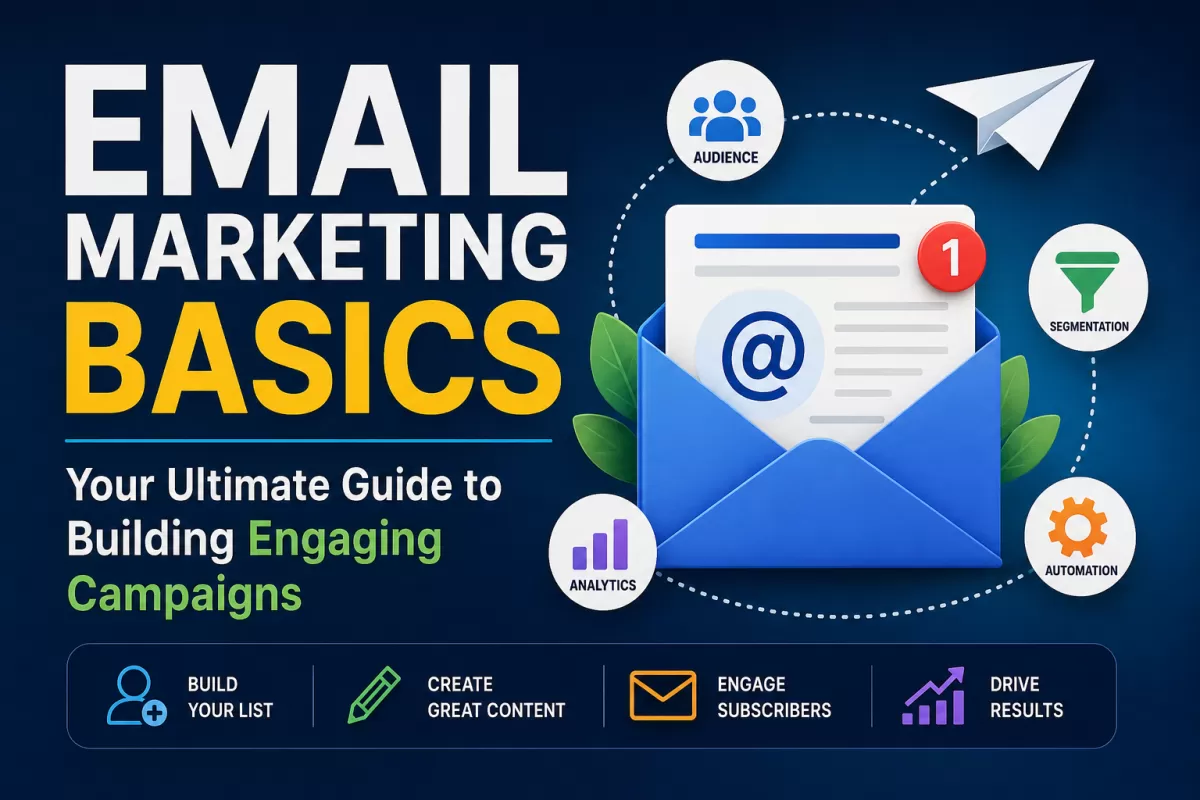
Email Marketing Basics: Your Ultimate Guide to Building Engaging Campaigns
Email marketing remains a powerful and cost-effective tool for businesses of all sizes, offering a direct line of communication with potential and existing customers. In a landscape crowded with digital noise, a well-crafted email campaign can cut through, nurture leads, drive sales, and foster brand loyalty. But where do you begin? This guide breaks down the essential email marketing basics, from understanding its core principles to implementing strategies that deliver measurable results.
Whether you’re a small business owner looking to connect with your audience or a marketer aiming to refine your strategy, mastering the fundamentals is crucial for growth. This article will equip you with the knowledge and actionable tips to build successful email campaigns that resonate with your subscribers and achieve your business objectives.
Understanding the Power of Email Marketing Basics
To succeed in your efforts, you must first recognize why this channel remains a top priority. Email offers a direct connection to your audience that social media algorithms often block. It is a reliable way to ensure your message reaches the people who want to hear from you.
Why Email Marketing Still Dominates
Despite new platforms appearing every year, email marketing remains a top performer. You own your email list, which means you control the relationship with your subscribers. When you publish a post on social media, you depend on their systems to show it. With email, your content goes straight to the inbox.
Data shows the power of this channel. For every $1 you spend on email marketing, the average return is often cited as $36. This high return on investment comes from the ability to send targeted messages to specific groups. You can tailor your content based on what you know about each subscriber.
Key Benefits for Businesses
Email marketing helps you achieve several key business goals at once. First, it is excellent for customer acquisition and retention. You can capture new leads on your website and keep them interested with regular updates. Second, it is highly cost-effective. Compared to paid ads, email costs very little to run. Finally, results are easy to track. You can see exactly how many people open your emails and click your links.
Building Your Email List: The Foundation of Success
You cannot have an email marketing strategy without a list of subscribers. The goal is to build a list of people who actually want to receive your emails. Do not buy lists, as this hurts your reputation and deliverability.
Strategies for Organic List Growth
The best way to grow is to offer value in exchange for an email address. Create a lead magnet, such as a checklist, guide, or template, that helps your target audience solve a specific problem. When someone wants this freebie, they will gladly share their contact information.
Placement of your sign-up forms also matters. Use pop-ups that appear after a reader has engaged with your content, or place static forms in your website’s sidebar and at the bottom of blog posts. You can also promote your newsletter on your social media channels to reach followers who may not visit your site often. For more strategies on expanding your reach, my guide to blog email marketing covers several effective methods I have used to grow a massive subscriber base.
The Importance of Consent and Compliance
Always be clear about what subscribers are signing up for. This builds trust and ensures you follow legal rules like GDPR or the CAN-SPAM Act. A great way to confirm interest is to use a double opt-in process. This requires the person to click a link in a confirmation email to join your list. It keeps your list high-quality because only those who truly want your emails will take this step. Always provide a clear, easy way for them to unsubscribe if they change their minds.
Crafting Compelling Email Content
What you say in your emails matters just as much as how you get people on your list. Your goal is to be helpful, not just promotional.
Writing Effective Subject Lines
Your subject line determines whether someone opens your email or deletes it. Keep it short, clear, and intriguing. Use personalization by including the subscriber’s name, or hint at a specific benefit they will get from opening the email. Test different subject lines to see which ones get more opens. Try something like “Unlock your free guide” versus “Do you have 5 minutes to learn this?” to see what works best.
Writing Effective Subject Lines
Your subject line determines whether someone opens your email or deletes it. Keep it short, clear, and intriguing. Use personalization by including the subscriber’s name, or hint at a specific benefit they will get from opening the email. Test different subject lines to see which ones get more opens. Try something like “Unlock your free guide” versus “Do you have 5 minutes to learn this?” to see what works best.
Designing Engaging Email Body Copy
Once they open the email, keep the content focused. Use a conversational tone as if you are writing to one person. State your point early, explain the value clearly, and keep paragraphs short. Every email should have one main goal, and that should lead to a single, clear call to action (CTA). Make sure your CTA button is easy to find and explains exactly what happens when they click it.
Visual Elements and Formatting
Visuals can make your emails easier to read, but do not overdo it. Keep your branding consistent with your logo, colors, and fonts. Make sure your emails are mobile-responsive so they look great on phones. Use bullet points and headers to break up long sections of text. This helps readers scan your email quickly to find the information they need.
Essential Email Marketing Strategies
Segmentation and automation are the two most powerful ways to get better results from your list.
Segmentation: Reaching the Right Audience
Do not send every email to every person on your list. Instead, divide your list into smaller groups based on things like their interests, past purchases, or where they live. For instance, an online store might send a discount code for shoes only to people who have recently browsed that category. When your emails are relevant, more people will open them and take action.
Automation: Saving Time and Nurturing Leads
Automation allows you to send the right message at the right time without manual work. A simple welcome series is a must for any business. When a new person signs up, send them a sequence of emails that introduces your brand, shares your best content, and offers a small discount on their first purchase. Other powerful automations include abandoned cart reminders to win back sales and special birthday emails to show your customers you care.
Measuring and Analyzing Performance
You cannot improve if you do not track your progress. Keep an eye on your open rates, which show how well your subject lines perform. Look at click-through rates to see if your content and CTAs are engaging. High bounce rates can mean your list needs cleaning. Regularly review these metrics and test small changes to see how they impact your results.
Tools and Best Practices for Email Marketing Basics
Choosing the right technology and maintaining your list are critical for long-term success.
Choosing the Right Email Service Provider (ESP)
Your ESP should make it easy to manage your list, create emails, and automate workflows. When comparing options, look for good analytics, easy-to-use email templates, and strong deliverability. For a detailed breakdown of the top options available today, this comparison of major email tools can help you decide which platform best fits your current needs and budget.
Maintaining List Hygiene
A healthy list means most of your emails arrive in the inbox, not the spam folder. Regularly remove email addresses that bounce and unsubscribe people who have not opened your emails in a long time. You can try a re-engagement campaign first to see if you can win them back, but do not be afraid to prune your list to keep it engaged.
Deliverability and Avoiding the Spam Folder
Your reputation as a sender is essential. If you send too many emails that people mark as spam, ISPs will start blocking your messages. Keep your content clean, avoid using too many spammy trigger words in your subject lines, and ensure your email authentication settings (like SPF and DKIM) are correctly set up by your ESP.
Conclusion
Mastering these email marketing basics is a long-term investment that pays off in steady growth and stronger customer relationships. Start by focusing on building your list ethically and ensuring your content delivers real value to your readers. Once you have a base, you can use segmentation and automation to make your campaigns more efficient and effective. Remember that email marketing is an ongoing process of testing, learning, and improving. Pick one of the strategies discussed here, such as setting up a welcome automation or cleaning your list, and start implementing it today to take your email marketing to the next level.